
EnergieTechnicsHonest adviceclear pricing

Fuse trips or breaker cuts out: this is what is going on

Does the same circuit breaker keep tripping again and again? This is how you can tell whether it is down to overload or to a fault that needs a professional.

Urgent electrical problem?

For an urgent problem, calling is the fastest way.

Call for a callout0494 37 68 68

Or leave your number and we will call you back as soon as possible.

Every time you switch on the washing machine and the oven together, the same circuit trips. Or a breaker keeps tripping for no clear reason. Annoying, and it calls for a targeted approach instead of blindly resetting it.

We go through the difference between a circuit that is simply overloaded and a genuine fault, what you can safely try yourself, and when you should call in an electrician.
Overload or a fault?

A circuit breaker protects its circuit against excessive current. If it trips after you use several power-hungry appliances at the same time, the circuit is probably overloaded: those appliances demand more power than the circuit can handle. That is a normal protective response indicating that the load is too high.

If, on the other hand, the breaker trips immediately, even without many appliances, or trips at random moments, that points more towards a fault: a faulty appliance, a damaged cable or an error in the circuit.

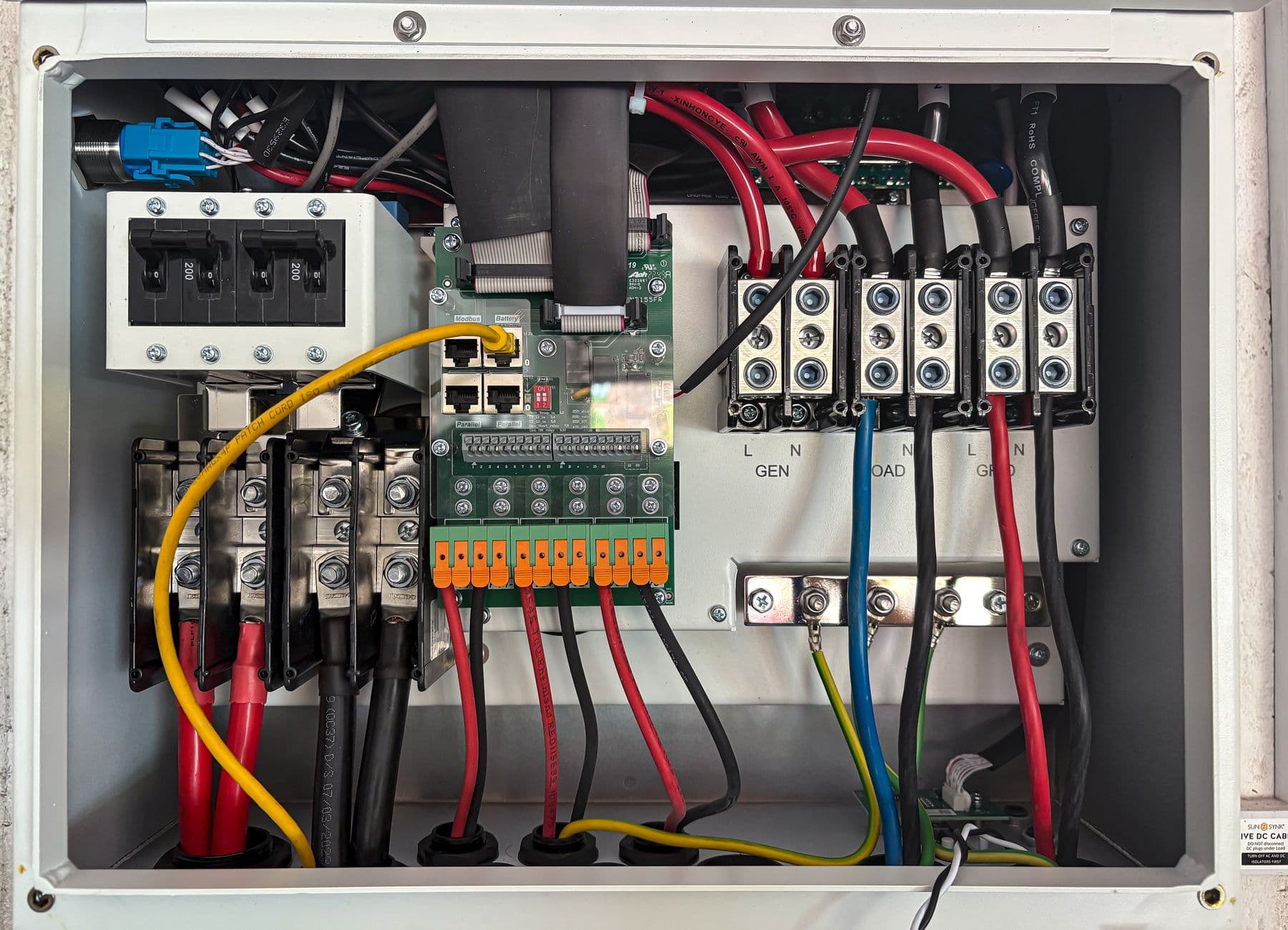
Open distribution board with circuit breakers, terminals and wiring
Photo: Magda Ehlers / Pexels

What you can try yourself

If you suspect overload, spread the heavy loads across different times or circuits. Do not switch everything on at once and see whether the problem disappears. If the circuit keeps tripping during normal use, the circuit may be too heavily loaded for its design.

If you suspect a fault, disconnect the appliances on the circuit, switch the breaker back on and reconnect the appliances one by one. This is how you identify which appliance is the culprit. If the breaker trips with no appliances connected, the fault lies in the installation itself.

When to call an electrician

Call when a circuit breaker keeps tripping immediately, when you smell burning or feel heat at the consumer unit, or when a circuit that used to work fine suddenly keeps cutting out. These are signals to have checked rather than to force.

Also, if you notice that you increasingly have to reset a fuse to keep your installation working, that is a reason to have the load and the wiring professionally assessed. Get in touch by phone.

Quick guidelines

Spread heavy appliances

Do not run the oven, washing machine and tumble dryer on the same circuit at the same time.

Test appliances

Connect them one by one to track down the culprit.

Empty circuit trips

If the breaker trips with no appliances connected, the fault lies in the wiring.

Heat or smell

Do you feel heat at the board or smell something? Do not force anything and call.

This is how you tackle a tripping fuse

  1. 1

    Determine the pattern

    Does it trip when many appliances run together, or also with no load?

  2. 2

    Reduce load or test

    Spread out heavy consumers or test appliances one by one.

  3. 3

    Check the consumer unit

    Do you feel heat or smell something at the fuse box? Stop and call.

  4. 4

    Have it checked

    If the circuit keeps tripping, have the load and wiring assessed.

Frequently asked questions

Why does my fuse trip when I switch on several appliances?
That means the circuit is overloaded: the current demanded exceeds what the circuit can handle and the circuit breaker protects itself. Spread the heavy appliances. If it still keeps happening during normal use, the circuit may be too heavily loaded and you should have it assessed.
What does it mean if the breaker trips again immediately?
If a breaker trips straight back, even with no appliances connected, that points to a fault or an error in the circuit, such as a damaged cable or a short circuit. Do not keep resetting it and have the circuit tested by a professional.
Is it a problem that I have to reset the fuse often?
Having to reset it again and again is a sign that something is structurally wrong: either the load is too high for the circuit, or there is a fault. Over time that puts strain on the installation. Have the cause checked instead of working around the problem each time.
Can I fit a heavier fuse myself?
No, you should not do that yourself. The circuit breaker is matched to the wiring of the circuit. Fitting a heavier fuse removes that protection and can overheat the wiring. The right approach is to have the circuit correctly sized by an electrician.

Does the fuse keep tripping?

If resetting does not provide a lasting solution, we check the load and the wiring. Call us for an urgent callout or an appointment, and we will solve it at the source.

Call for a callout0494 37 68 68