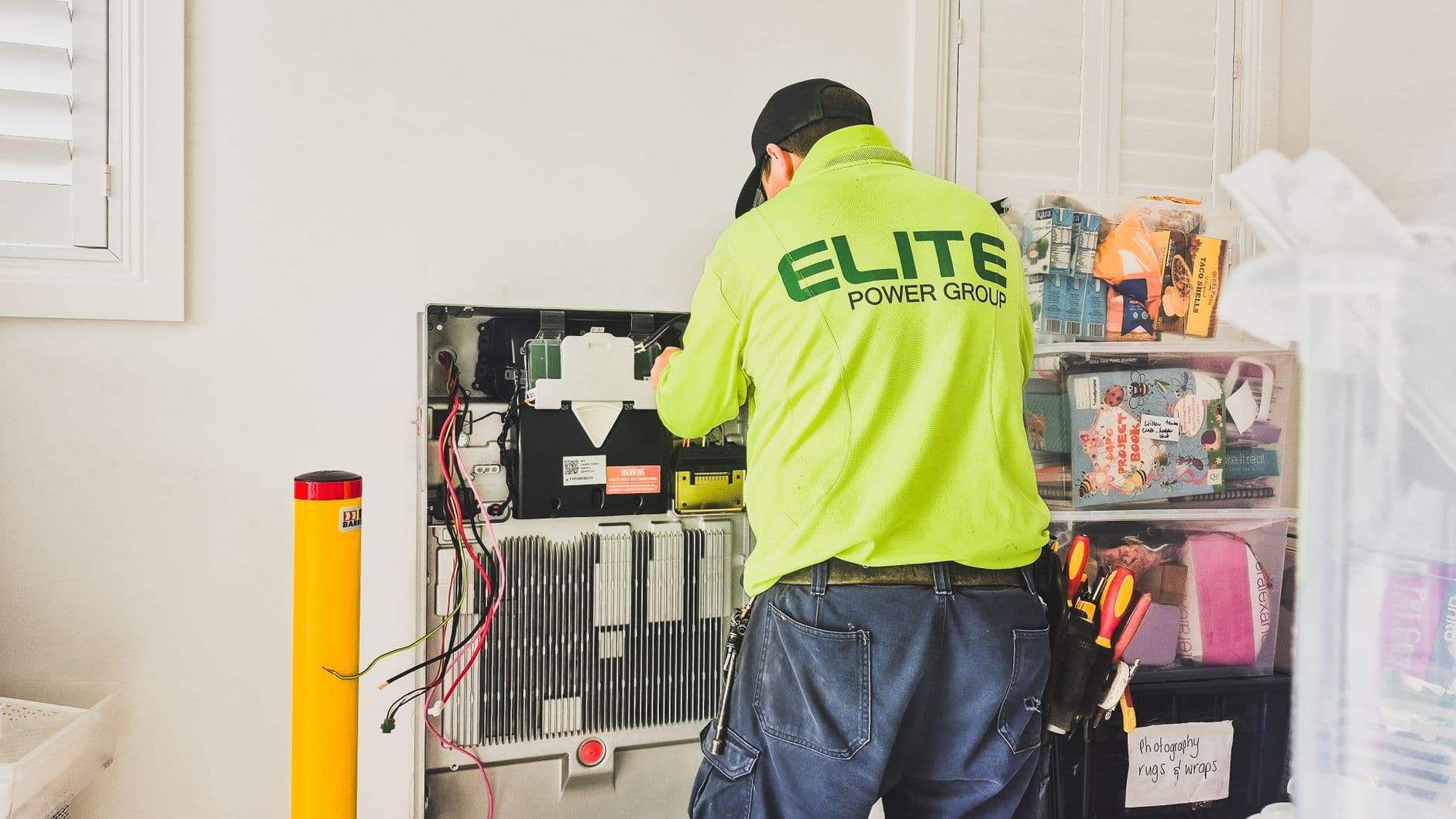
One device that controls your panels and battery together and is ready for the future.
Briefly describe what is going on. Call for an urgent intervention or leave your number and we will call you back as soon as possible.
Bezig met een storing? Laat je nummer na, we bellen je zo snel mogelijk terug voor een dringende interventie.
Where a classic inverter only converts the power from your solar panels, a hybrid inverter can also control a home battery. That makes your installation ready for storage in one move: your solar power can go to your home, to the battery or, where appropriate, to the grid.
A hybrid inverter is especially interesting when you already know that storage is part of your plans, or when you are unsure and want to keep the door open. You then do not replace the core of your installation later, but simply add a battery.
A hybrid inverter manages the flow of power between three directions: your panels, your battery and your home. During the day it sends surplus solar power to the battery; at times without sun it draws on that stored energy again. This way more of your own generation stays in the house.
Because storage and conversion are housed in a single device, you do not need to install a separate battery inverter. That makes the installation more compact and the control simpler. We tailor the precise operation and settings to your consumption.
Since the reversing meter was phased out with the digital meter, feeding electricity back into the grid yields less than it used to. Consuming your own solar power has therefore become more important, and storage is a means to that end. The capacity tariff also rewards more even consumption, which makes control interesting.
Whether a hybrid inverter with battery pays off for you depends on your home, your consumption pattern, the size of your installation and energy prices. We do not calculate a fixed saving in advance, because it differs from one situation to another. During a site visit, however, we will look concretely at what storage would mean in your case.
If you are installing new solar panels and considering storage, a hybrid inverter is immediately the logical choice. Also, when your existing inverter is due for replacement, that is a natural moment to switch and make your installation ready for a battery.
If you already have panels with a classic inverter, expanding to storage is also possible, but the approach differs. We assess per situation whether a hybrid inverter or a separate battery solution is the better fit.
You add storage later without replacing the core of your installation.
Excess solar power goes to the battery instead of to the grid at a lower value.
You use stored power during moments without sun, which fits the capacity tariff.
Conversion and storage management sit in a single unit, without a separate battery inverter.
A hybrid inverter gets your installation ready for a home battery. We assess whether that pays off in your situation and propose a tailored solution.
