From string to micro: which type of inverter gets the most out of your roof.
Briefly describe what is going on. Call for an urgent callout or leave your number and we will call you back as soon as possible.
Bezig met een storing? Laat je nummer na, we bellen je zo snel mogelijk terug voor een dringende interventie.
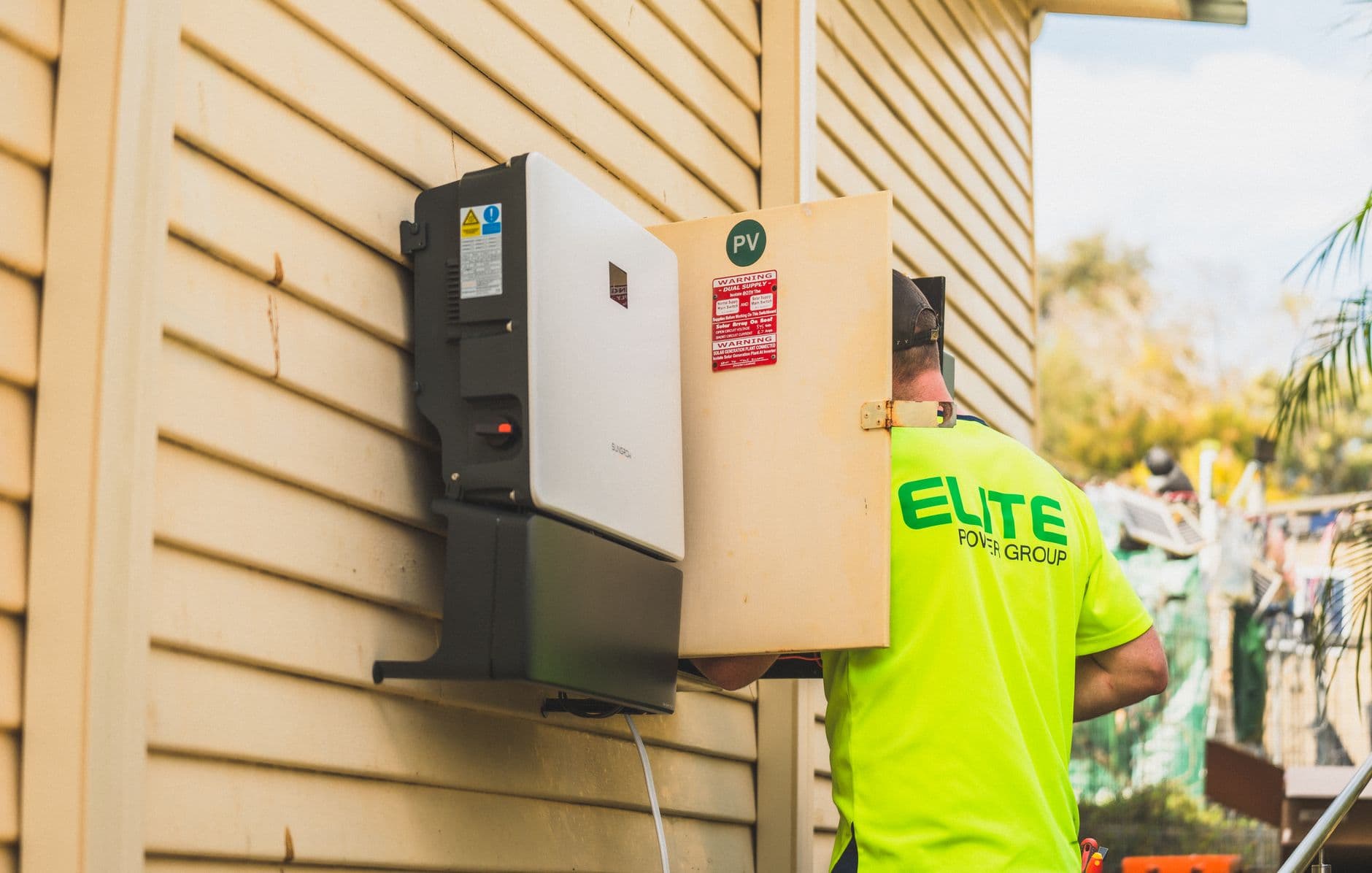
The inverter is the heart of your solar installation: it converts the direct current from the panels into the alternating current your home uses. The question of which inverter suits solar panels depends on your roof, the shading situation and what you may want to add later, such as a home battery or control of your consumption.
There is no inverter that is right for every roof. An east-west roof with some shading makes different demands than a neat south-facing roof without obstacles. That is why, during a site visit, we first look at your situation before we propose a type and capacity.
With a string inverter, several panels are connected in series to a central inverter. This is a tried and tested and usually cost effective setup, ideal for an even roof without shade. The downside: if one panel in the string performs less well due to shade or dirt, it drags down the whole series.
Micro inverters are fitted per panel (or per pair of panels) and each works separately. A panel in the shade then does not hold back the rest. That is interesting for roofs with multiple orientations, dormers, chimneys or trees that cast shade. Micro inverters usually require a higher investment, but this weighs up differently in each situation. An optimizer system is an intermediate solution that limits shade loss per panel with a central inverter.
The inverter capacity must match the total peak capacity of your panels, expressed in kWp. An inverter that is sized too small will curtail output during sunny peak moments. An inverter that is far too large often operates inefficiently in the low range.
In practice, installers deliberately choose the inverter capacity slightly below the panel capacity, because panels rarely reach their theoretical peak capacity in Flanders. The right ratio depends on your orientation, tilt angle and expected production. We calculate this based on your specific installation.
If you want a home battery later, it is wise to take that into account when choosing the inverter. A hybrid inverter can control both your panels and a battery, so when you add storage you do not have to replace the core of your installation again.
Since the reversing meter has been phased out with the digital meter, self-consuming your own solar power has become more important. An installation that is ready for storage and control helps you to use that power at the right time. Whether that makes sense for you depends on your consumption and your daily pattern.
We come by, look at your roof and consumption and propose an inverter that suits your installation and your plans. Request a quote with no obligation.
